
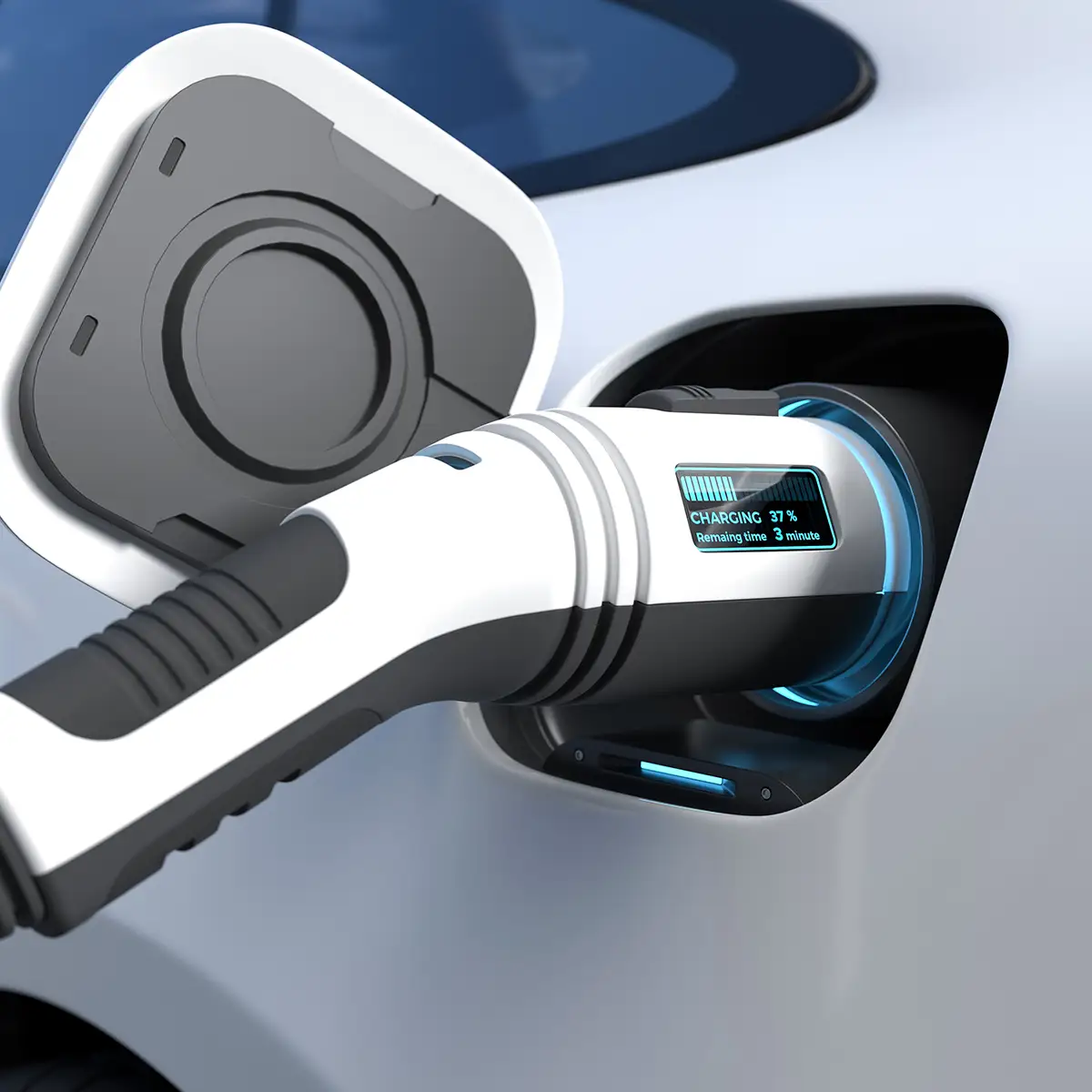
A Level 2 EV charger does not automatically require a 200-amp service. The right installation depends on existing loads, the vehicle, charger settings and available capacity. An electrical evaluation should establish whether a dedicated circuit, approved load management or a service upgrade is the best fit.
Buying an electric vehicle is the easy part of the charging decision. The next question is how to charge it reliably where you live or work. For Denver Front Range properties, start by matching the charging system to daily driving needs and the building’s electrical system. We R Electric LLC helps customers evaluate that fit before installation.
Panel ratings are only part of an EV-charging evaluation; the connected loads also matter.
Level 1 versus Level 2: what changes?
Level 1 charging uses a standard 120-volt supply. Level 2 typically uses 240 volts at a home, with 208-volt supplies also common in commercial settings. Charging speed depends on both the vehicle and the charging equipment, not just the label on the charger. [1]
For a driver who parks overnight, an appropriately sized Level 2 system can be more useful than selecting the highest output available. Bring your vehicle model, typical daily mileage and parking routine to the installation discussion.
Does your home need a panel or service upgrade?
Available breaker spaces do not prove that a service has spare capacity. An evaluation should consider major heating and cooling equipment, cooking appliances, laundry equipment and other planned electrical additions.
A home with an existing 100-amp service may have options besides an immediate upgrade. Ask about a lower charging rate or compatible, approved load-management equipment. These options still require a project-specific design; they are not a substitute for checking the electrical system. We R Electric’s EV installation service includes evaluating the existing system and charging requirements. [2]
A larger panel alone does not increase the capacity of the utility service, conductors or other equipment upstream. Where an upgrade is appropriate, define the complete scope before ordering equipment.
Commercial charging needs a different planning conversation
For offices, multifamily properties and commercial parking areas, decide who will use the chargers, how long vehicles will remain parked and how many vehicles may charge at once. Include the property owner, utility and design team early when their coordination is needed.
An installation scope should address equipment locations, conduit routes, parking access, electrical distribution and future expansion. Networking, payment features and ongoing maintenance also need an owner; electrical installation alone does not decide those operating responsibilities.
What affects the installation estimate?
Panel-to-charger distance, routing, trenching, equipment requirements, available capacity and permit scope all affect the work. A charger beside a suitable garage panel is a different project from multiple stations across a commercial parking lot.
For a useful estimate, provide the charger model, parking location, photos of the closed electrical equipment and any planned upgrades. Do not remove electrical covers to take photographs. Ask which permits, inspections and utility steps are included before approving the work.
Plan your charging installation
Request a free EV-charger installation estimate from We R Electric LLC. Tell us where you park, which vehicle you drive and what other electrical upgrades you are considering.
Serving Denver, Littleton, Lakewood, Centennial, Aurora and Parker. Contact the office to confirm availability for your project location.
faqS
Can I install an EV charger with a 100-amp service?
Possibly. Existing loads and the selected charging rate must be evaluated. Load management may be an option, but some properties will need additional capacity.
Is an empty breaker space enough?
No. Physical space and electrical capacity are different. Both must be checked along with the equipment and circuit requirements.
Can my business start with a few chargers and add more later?
Yes, that can be a planning approach. Ask the project team to evaluate future conduit, distribution capacity and parking needs before the first phase is installed.